Products » Analytics » Liquid Analysis » UV Nitrate Analyzer (Turbidity)

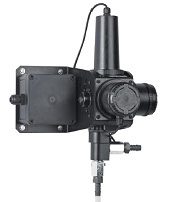
Liquid Analyzer - Turbidity
IME SA provides a wide range of liquid analyzers using different analytical modules depending on the characteristics of the liquids, the components to be analyzed and the applications for which they are intended.
The Turbidity Analyzer has its most common application in potable water treatment plants as a means of determining the quality of the final water that has been treated. Turbidity measurement is a critical measure in the analysis performed on drinking water as it is used to indicate its water quality as well as the effectiveness of the filtration devices (for example, if disease causing organisms are present).
Regardless of the two measurable ranges (low range 0 to 40 NTU and high range 0 to 400 NTU) the Turbidity Analyzer features a reliable and accurate turbidity measurement based on an automatic optical cleaning system and the standard calibration check dry.
PRINCIPLE OF MEASURE:
- Measurement of light intensity by 90 traseira backscattering.
COMMON APPLICATIONS:
- Treatment of drinking water, namely in the determination of the quality of treated water;
- Analysis of water from wells.
FUNCTIONALITIES:
- Innovative design that allows the optimization of the response time to changes in turbidity level (T90 <1 min at 1 l / min-1);
- Automatic sensor cleaning, reducing the need for maintenance and optimizing its sensitivity, resulting in better performance;
- Use of secondary standards for calibration verification (accurate, repeatable, safe and simple) leading to significant cost savings by reducing the use of primary standards
- Ease of use and maintenance, with intuitive docking and easy access interface;
- Reliable and accurate measurement from the analytical method that allows for very high accuracy levels for lower measurement ranges;
- Automatic Bubble Reject System to compensate for wrong readings due to degassing.
MEASURING RANGE
- Low Range - 0 to 40 NTU;
- High Range - 0 to 400 NTU.
DETAILS OF MEASUREMENT:
- Accuracy: <± 2% of reading for low range and <± 5% for high reading range;
- Repeatability: <1% for low range and 2% for high range.